Most media plans presented to Indian D2C founders are channel lists disguised as strategy. They divide a budget between digital platforms, creators, marketplaces, and offline inventory without explaining how each placement changes discovery, consideration, conversion, or repeat demand. A capable D2C media planning agency in India should do more than negotiate inventory. It should connect audience behaviour, creative supply, distribution, first-party customer conversations, and commercial measurement into one operating system.
The founder-level question is not simply where to advertise. It is where the next rupee should go, what message it should carry, and how the resulting demand will be captured. That requires a media plan built around buying situations rather than fashionable channels. This playbook explains how to brief agencies, structure channel roles, build enough creative for testing, connect offline and online exposure, and evaluate whether a media partner can actually operate at D2C speed.
Start With the Buying Situation, Not the Media Menu
A media planning engagement should begin with the commercial situation facing the brand. A new category requires education, while an established category may require sharper differentiation or easier access. A high-consideration product needs proof and objection handling. A frequently purchased product may depend more on salience, availability, and replenishment. If an agency recommends channels before understanding these conditions, it is planning around available inventory rather than the customer decision the brand needs to influence.
Give the agency a decision brief instead of a generic marketing brief. Define the priority product, customer problem, buying trigger, geographic focus, sales destination, current creative evidence, and operational constraints. Include where customers hesitate, which claims need explanation, and whether the transaction happens on the brand website, an app, a marketplace, or through an assisted conversation. This forces the plan to account for the complete path from exposure to purchase rather than treating impressions as the finished product.
The next step is to assign every channel a specific job. Some placements create memory before active demand exists. Others capture existing intent, demonstrate the product, deliver social proof, initiate a WhatsApp conversation, or bring the product into a customer’s hands. One channel can perform several jobs, but the plan should still state its primary role. Without that clarity, every channel is judged against immediate sales even when it was purchased to improve discovery or consideration.
Ask the agency to document the assumptions behind each recommendation. Why should this audience care in this context? What creative format belongs there? What action should follow exposure? How will the brand recognise whether the assumption was correct? These questions reveal whether the planner understands Indian D2C behaviour or is recycling a standard deck. The strongest media plan is not the one with the most channels. It is the one with the clearest chain of commercial reasoning.
Build a Channel Architecture Around Customer Movement
Indian consumers move between feeds, marketplaces, messaging, physical locations, and peer recommendations without respecting internal marketing silos. Your media architecture must therefore explain how customers move between environments. A short video may generate curiosity, a search may validate the brand, an offline screen may strengthen familiarity, and WhatsApp may resolve the final objection. Planning these moments independently produces fragmented reporting and repeated spending against the same person without a coherent progression.
Use three operating layers: attention, evidence, and action. Attention placements earn notice in crowded environments. Evidence assets answer questions through demonstrations, comparisons, founder explanations, customer context, and product detail. Action channels make buying, enquiring, locating, or receiving support easy. The agency should show how audiences progress across these layers and where they can enter. A customer already searching for the category does not need the same sequence as someone encountering the problem for the first time.
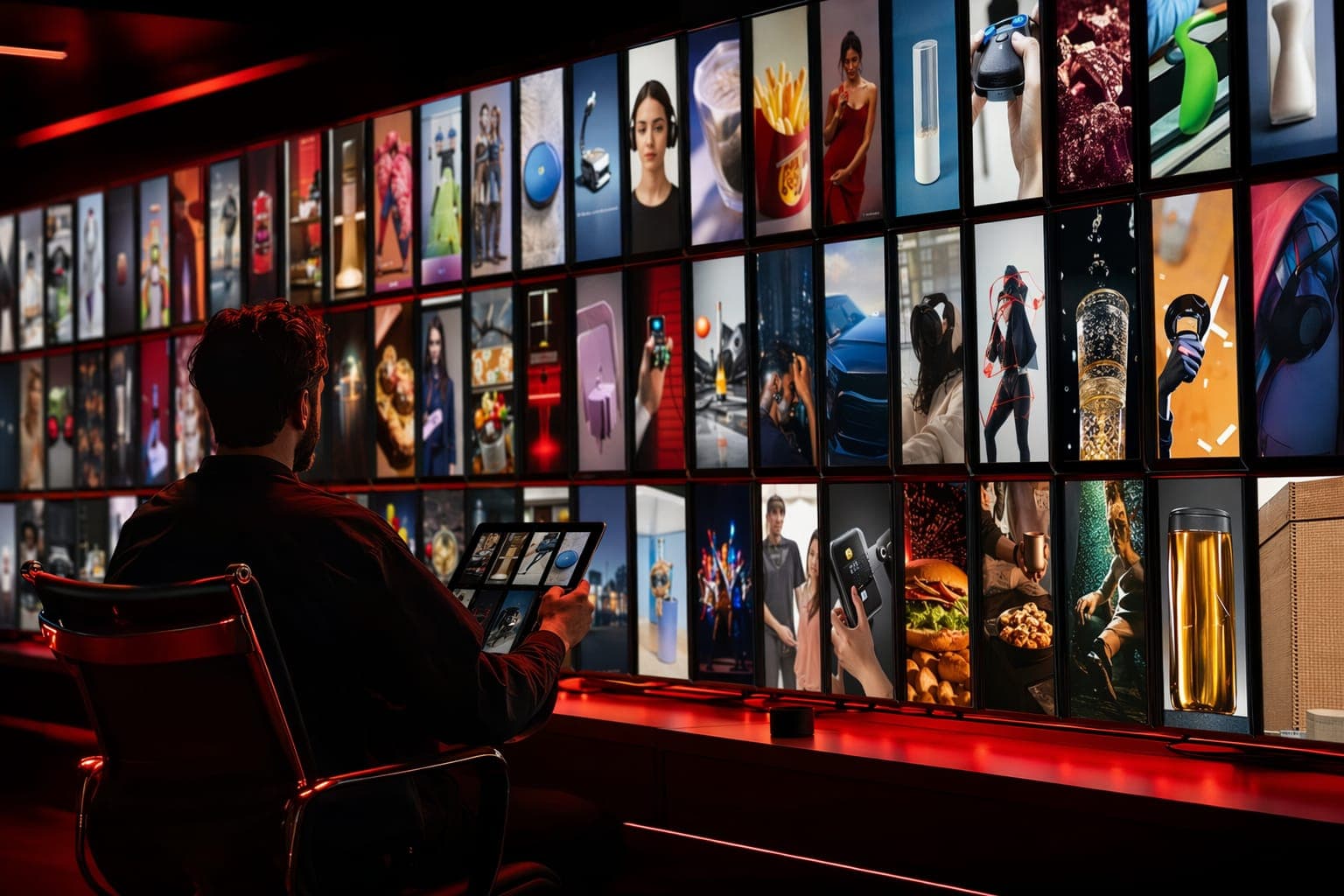
Owned and offline distribution can complement auction-based media when the context is deliberate. WTF Amplify’s owned media network includes 300+ screens, 3 Cr+ monthly impressions, 1 Lakh+ samples per month, and 1.5 Lakh+ app users. Those assets should not be inserted merely to expand a reach slide. Screens, app inventory, and sampling each create different forms of attention or product experience, so the message, location, handoff, and measurement approach must match the role.
Do not let channel architecture become channel sprawl. Every additional surface creates creative requirements, operational dependencies, and reporting work. A disciplined agency will identify the smallest useful combination of environments that can test the core buying thesis. Expansion should follow evidence, not presentation theatre. Founders should insist on a clear reason for adding any placement, the behaviour it is expected to influence, and the existing activity it complements rather than duplicates.
Treat Creative Supply as Media Infrastructure
Media planning fails when creative production cannot keep pace with distribution. Buying more inventory against a narrow set of ads increases repetition without increasing learning. A D2C media planning agency should therefore assess creative capacity before proposing channel scale. The relevant questions include how many hooks can be explored, which objections need separate treatments, how formats change by placement, and how quickly learning can return to the production team. Creative is not decoration added after the plan; it is operating capacity.
Organise creative around customer questions rather than random concepts. Build separate territories for problem recognition, product mechanism, comparison, usage context, trust, founder perspective, customer proof, and purchase friction. Each territory can support multiple openings, visual treatments, and calls to action without changing the underlying strategic point. This gives the agency enough variation to learn why a message works instead of simply declaring that one isolated asset performed better than another.
WTF Amplify’s Content Engine is designed for sustained volume: 100 reels per week at $0.30 per clip versus an industry range of $80-200. The strategic value is not volume for its own sake. It is the ability to generate enough structured variations for different audiences, contexts, and media surfaces. A low-cost production system lets the team retire weak angles, adapt useful ideas, and maintain message freshness without making every test dependent on a traditional production cycle.
The agency should connect creative labels to media reporting. Every asset needs a readable strategic identity: audience, buying situation, message territory, format, product, and intended action. That creates learning the founder can reuse across channels. Reporting only by file name or visual thumbnail makes the account dependent on individual memory. A proper creative taxonomy turns media spending into a growing evidence base about what customers notice, believe, question, and act upon.
Design Measurement Before Buying Inventory
Measurement must reflect the job assigned to each channel. Immediate revenue may be suitable for intent capture, but it is incomplete for product education, physical sampling, or repeated brand exposure. This does not mean accepting vague awareness reporting. It means defining observable signals that match the placement: qualified visits, branded discovery, product-page engagement, conversations initiated, samples connected to identifiable actions, marketplace movement, or assisted conversions. The agency should state what can be measured directly and what requires interpretation.
Ask for a measurement map covering exposure, response, commercial outcome, and data limitations. The map should identify which systems own each event and how duplicate credit will be handled. Platform dashboards often claim the same order, while offline exposure may have no deterministic identity. A credible partner will not pretend attribution is perfect. It will use consistent rules, clearly labelled evidence, and controlled comparisons where possible rather than manufacturing certainty from incompatible reporting windows.
Founders should also separate planning metrics from business metrics. Reach, frequency, cost per view, and response rates help teams manage media, but they do not define company health. Contribution, order quality, customer support load, returns, repeat behaviour, and fulfilment constraints can change the value of acquired demand. The agency does not need to own every function, but its recommendations must recognise these economics. Cheap attention that creates unsuitable orders is not efficient growth.
Review performance as a decision log, not a dashboard tour. Each review should state what the team believed, what was deployed, what evidence appeared, what remains uncertain, and what changes next. This prevents retrospective storytelling and endless minor optimisation. The goal is to improve allocation and messaging quality over time. If meetings contain many charts but no explicit decision, the agency is reporting activity rather than operating a media system.
Evaluate the Agency as an Operating Partner
When comparing a D2C media planning agency in India, examine the operating model before examining the presentation. Identify who builds the plan, who buys or coordinates inventory, who analyses results, and who can change creative. Clarify whether offline, digital, content, messaging, and sales handoffs are managed together or passed between disconnected teams. A polished senior pitch followed by fragmented execution creates delays precisely when the brand needs fast decisions and clear accountability.
Request a working-session audit rather than speculative promises. Give each shortlisted partner the same commercial situation and ask how it would diagnose the audience, assign channel roles, identify creative gaps, structure measurement, and sequence experiments. Do not ask for guaranteed outcomes. Look for explicit assumptions, trade-offs, operational dependencies, and reasons to exclude channels. Strong operators are comfortable saying what should not be purchased until the necessary evidence or customer journey is in place.
Commercial terms should reflect the work required without rewarding unnecessary media expansion. Understand how planning, buying, production, technology, inventory, and reporting are priced. Ask whether recommendations change the agency’s compensation and whether owned inventory is clearly disclosed. The objective is not to force every component into the lowest fee. It is to remove incentives that favour spending volume over decision quality. Transparent economics make disagreements easier to resolve when a channel should be reduced or stopped.
WTF Amplify approaches media planning as a connected growth system rather than an isolated buying desk. The Content Engine supplies creative volume, the media network adds owned distribution, WhatsApp can capture and support conversations with 33-second average replies and 80% support automation, and outreach can support relevant commercial acquisition workflows. A founder should still begin with the buying problem. Systems become useful only when their role, handoff, and measurement are designed around that problem.
Questions we get asked
What does a D2C media planning agency in India do?
It translates a brand’s commercial objective into audience priorities, channel roles, creative requirements, budget allocation, buying decisions, and measurement rules. The best agencies connect paid, owned, marketplace, messaging, and offline touchpoints instead of presenting each channel as a separate campaign.
How should a D2C founder compare media planning agencies?
Compare their diagnosis, operating model, channel logic, creative capacity, measurement discipline, commercial transparency, and ability to coordinate execution. Ask each agency to solve the same working brief and judge the clarity of its assumptions and trade-offs rather than relying on speculative forecasts.
Should offline media be included in a D2C media plan?
Yes, when it has a defined role in customer discovery, familiarity, product experience, or conversion. Screens, sampling, and app inventory should have context-specific creative, a clear handoff, and realistic measurement. Offline inventory should not be added merely to make the media plan appear broader.
Systems behind this playbook
Bring us your buying problem, current channel mix, and creative bottleneck; we will map the media system before recommending inventory.
Book a demo