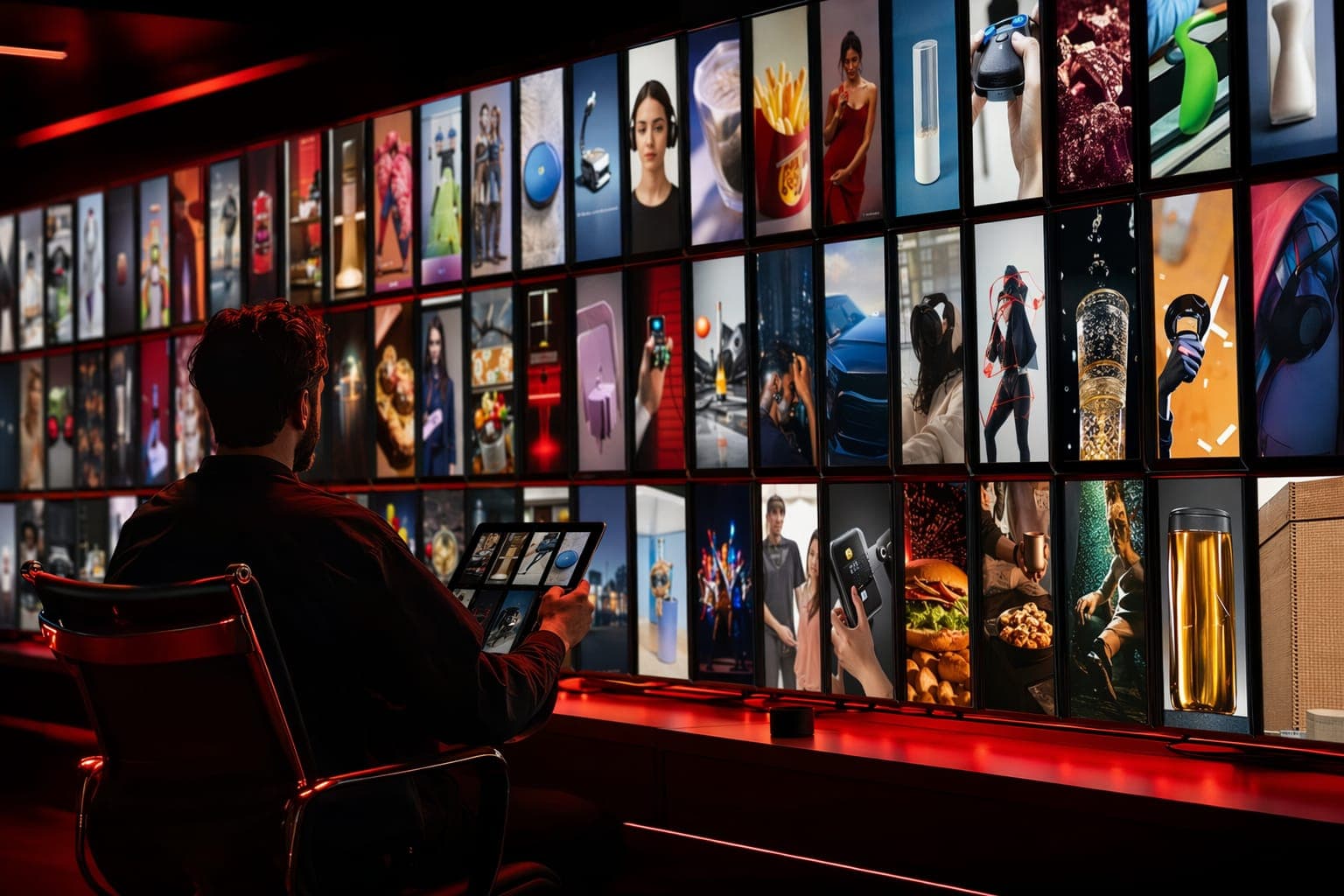
Most D2C brands approach trade shows as temporary branding projects: build a booth, print collateral, assign a sales team and hope the right buyers walk past. That is expensive theatre unless every interaction connects to a measurable commercial workflow. A capable trade show marketing agency in India should own the journey from pre-event targeting and booth content to lead qualification, follow-up and reporting. The booth is only the physical entry point; the real asset is the demand system around it.
As founders, we should evaluate an exhibition by the conversations it creates and what happens after those conversations. Relevant visitors may include distributors, retailers, institutional buyers, marketplace partners, corporate procurement teams, creators and consumers. Each needs a different pitch and next action. This playbook explains how to brief an agency, structure event operations and connect content, WhatsApp, voice outreach and field media without treating a pile of scanned badges as a successful outcome.
Define the commercial job before designing the booth
Start by deciding what the trade show must accomplish for the business. A brand seeking distributors needs territory, category, channel and order-capability information. A brand meeting retailers needs store footprint, assortment interest and procurement ownership. A consumer-led exhibition may instead focus on trials, product education, direct orders or permission-based remarketing. These are different funnels. If the agency begins with stall dimensions, fabrication materials or visual references before clarifying the commercial job, it is operating as an event vendor rather than a growth partner.
Build separate visitor journeys around buying intent instead of forcing everyone through one generic form. A distributor may require a commercial deck and a founder conversation, while a consumer may need a demonstration, offer or product recommendation. Institutional buyers may need documentation, fulfilment information and a scheduled discussion. The capture flow should identify who the visitor is, what they want and who owns the next action. This makes post-event prioritisation possible without relying on handwritten notes or the memory of booth staff.
Agree on reporting definitions before the event. Footfall, product interactions, captured contacts, qualified opportunities, meetings requested and follow-up status should not be mixed together. A visitor who accepts a sample is not automatically a trade lead, and a badge scan is not a buying signal. Ask the agency to show how each record will be tagged, routed and reviewed. The cleanest operating model gives the on-ground team a simple capture interface while preserving enough context for sales and marketing teams to act.
Create demand before visitors reach the exhibition floor
Trade show performance should not depend entirely on passing traffic. Before the event, build a target account list from exhibitor directories, partner networks, existing enquiries, relevant retailers and public business information. Segment that list by commercial relevance and prepare outreach around a specific reason to meet. The message should not say that the brand will merely be present. It should explain what the recipient can evaluate at the booth, which commercial question can be discussed and how to reserve a conversation.
Outbound execution needs coordination across email, professional networks, WhatsApp and calling, subject to consent and channel rules. The objective is not mass blasting; it is reaching the right buyer with enough context to justify a meeting. WTF Amplify's Outreach Engine can qualify 1,840 leads per day and book 412 demos per day. Those are system capabilities rather than guaranteed event outcomes, but they illustrate the operating scale available when list building, qualification and scheduling are handled as one workflow.
Content should create familiarity before the event. Founder invitations, product demonstrations, buyer-specific explainers, venue updates and behind-the-scenes clips can be distributed across brand channels and sent directly to relevant contacts. The Content Engine produces 100 reels per week at $0.30 per clip, compared with an industry range of $80-200. That production model lets teams build multiple messages for different visitor types instead of placing the full burden on one generic event announcement or expensive hero video.
Design the booth as a qualification interface
A strong booth helps a visitor understand the category, product difference and next action without requiring a long explanation from staff. Messaging should work at different distances: a clear category cue for someone walking past, a sharper value proposition for someone who pauses and supporting proof for someone considering a conversation. Avoid covering every surface with claims. The job is to attract relevant attention, enable product understanding and make it easy for the team to identify intent.
The physical experience should support the product rather than compete with it. Sampling, demonstrations, comparison displays and packaging education need scripts, replenishment plans and clear ownership. Staff should know how to open a conversation, identify visitor type, answer common questions and transfer qualified opportunities. A trade show marketing agency should rehearse these workflows with the brand team. Good fabrication cannot compensate for unclear roles, missing stock, inconsistent answers or a lead form that staff avoid using during busy periods.
Content capture should also be planned as an operating stream. Customer reactions, founder conversations, retailer questions, product demonstrations and partner interviews can feed post-event distribution when permission is secured. Create shot lists and approval rules before the show so the team does not collect unusable footage. The objective is not merely to document the booth. It is to convert real market interactions into useful sales enablement, social proof, frequently asked questions and short-form content that extends the event beyond the venue.
Capture context, consent and buying intent
Lead capture fails when the form is either too shallow to support follow-up or too long for a crowded booth. Collect the minimum information required to identify and route the opportunity, then allow staff to add structured context. Useful fields may cover visitor type, organisation, location, channel interest, product interest, decision role and requested next step. Sensitive or unnecessary information should be excluded. The visitor should also understand why their details are being collected and which communication they are agreeing to receive.
Qualification should happen while the interaction is still fresh. High-intent buyers may need an immediate meeting handoff, while exploratory contacts may enter a slower education journey. Consumers requesting product information should not be placed into the same queue as distributors or procurement teams. Define routing rules before doors open, including the owner for each segment and the information required for acceptance. This prevents the common post-event argument between marketing and sales about whether a contact was useful or properly qualified.
Make operational resilience part of the brief. Venue connectivity can be inconsistent, staff can change and rush periods can expose weak processes. The agency should provide a fallback capture method, clear device ownership, duplicate controls and a process for reconciling records. Ask where the data will live, who can access it and how it will enter the brand's systems. A spreadsheet delivered after attention has faded is not a lead management plan; it is only a record of missed urgency.
Build a follow-up engine instead of sending one message
Post-event follow-up should reference the actual conversation, product or commercial request. Generic messages thanking every visitor for stopping by are easy to ignore because they provide no continuation. Route each segment into an appropriate journey: requested documents, meeting scheduling, distributor qualification, retail discussion, product education or consumer support. Every message should have one clear next action and an identified owner. The agency's scope should continue until records are routed, attempted, updated and visible to the responsible brand team.
WhatsApp can manage rapid responses, document sharing, reminders and common questions when consent and approved workflows are in place. WTF Amplify's WhatsApp Engine delivers 33-second average replies and 80% support automation. That capability is useful after a trade show because teams often receive repeated questions while also handling priority commercial conversations. Automation should handle predictable requests and status updates, while complex negotiations or sensitive concerns move to a human owner with the booth context attached.
Voice follow-up is valuable when a visitor requested a conversation, submitted a serious trade enquiry or needs clarification before progressing. WTF Amplify's Voice Engine supports more than 10,000 calls per day, sub-800ms Hinglish interactions and a cost of Rs 6-10 per call. Use that capacity selectively rather than calling every captured contact with the same script. The conversation logic should confirm interest, collect missing qualification details and offer a relevant next step, with escalation to the appropriate human team.
Choose an agency by systems, not booth photographs
A portfolio of attractive booths proves design and execution capability, but it does not prove demand generation or follow-up discipline. Ask prospective agencies to map the complete operating flow: target-list creation, invitation outreach, meeting scheduling, booth messaging, staffing, lead capture, qualification, routing and reporting. Request sample dashboards and field structures rather than confidential client results. You want to understand whether the agency can connect physical execution with your CRM, communication channels and internal owners without creating an isolated event database.
Commercial proposals should separate fabrication and venue operations from growth-system costs. This helps founders see what they are paying for across creative development, content production, outreach, technology, staffing, sampling, logistics and follow-up. Clarify which items are pass-through expenses, which depend on venue conditions and who manages approvals. Avoid selecting solely on the lowest booth quote. A cheaper physical build can become expensive when the brand team must manually repair targeting, data capture and follow-up after the event.
The event can also be amplified beyond the venue when the audience and distribution plan justify it. WTF Amplify's owned media network includes 300+ screens, more than 3 Cr monthly impressions, more than 1 Lakh samples per month and over 1.5 Lakh app users. These assets can support awareness, sampling and continued engagement, but they should be deployed against a defined audience rather than added as decoration. The operator question remains simple: does each channel move a relevant buyer or consumer toward a useful next action?
Questions we get asked
What should a trade show marketing agency in India handle?
The agency should handle more than booth fabrication. A complete scope can include audience definition, target-account outreach, meeting scheduling, booth messaging, content, staffing workflows, product demonstrations, consent-based lead capture, qualification, CRM routing, WhatsApp or voice follow-up and reporting. Ownership should be documented so the agency, sales team, marketing team and event vendors know exactly what happens before, during and after the exhibition.
How should a D2C brand evaluate trade show performance?
Evaluate the event through funnel stages rather than raw footfall. Track relevant interactions, complete contact records, qualified opportunities, requested meetings, accepted handoffs, follow-up status and commercial progression. Keep consumer engagement separate from distributor, retail and institutional opportunities. The correct measurement model depends on the event's original commercial job, so definitions and data fields should be agreed before the booth goes live.
When should WhatsApp and voice automation be used after an event?
Use WhatsApp for consent-based information delivery, reminders, document sharing, common questions and scheduling. Use voice when a contact requested a call, showed meaningful trade intent or needs qualification before a human conversation. Automation should preserve context from the booth and route complex cases to the correct owner. It should not become an excuse to send identical follow-ups to every visitor whose badge was scanned.
Systems behind this playbook
Turn your next trade show from a booth expense into a qualified demand and follow-up system.
Book a demo