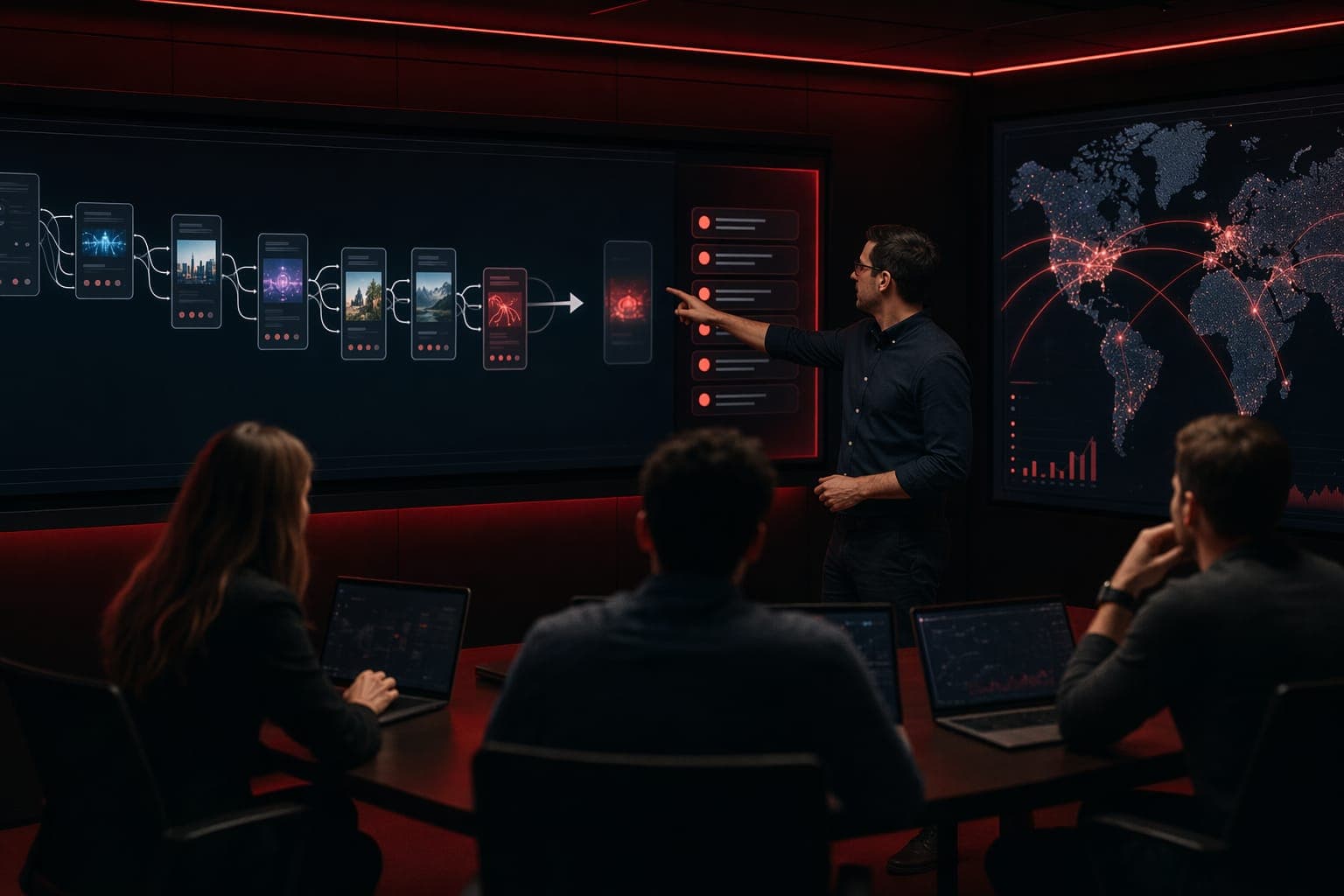
Most India D2C brands approach retention after acquisition costs become uncomfortable. The usual response is to hire an agency to send more broadcasts, add discount flows and increase campaign frequency. That may create short-lived revenue, but it does not create a retention system. Sustainable retention comes from understanding why customers return, where repeat intent disappears and which channel should handle each conversation without exhausting the customer.
A capable D2C retention marketing agency in India should operate beyond campaign execution. It must connect customer data, creative production, WhatsApp conversations, support signals and win-back workflows. It should also distinguish between a customer who needs education, one who needs reassurance and one who is ready to reorder. Treating every customer as a broadcast audience is easier, but it usually produces weak learning and avoidable channel fatigue.
This playbook explains how I would evaluate a retention partner as a founder: begin with commercial diagnosis, map lifecycle journeys, build a usable content supply, automate routine conversations and measure incremental behaviour rather than dashboard activity. The objective is not to find an agency that sends the most messages. It is to find an operator that can make repeat purchase behaviour more predictable without turning every interaction into a coupon event.
Diagnose the Retention Problem Before Hiring an Agency
Before discussing retainers or channels, ask the agency to explain where retention is actually breaking. Weak repeat purchase can come from product expectations, onboarding gaps, confusing usage, delayed support, poor replenishment timing or irrelevant offers. These are different operating problems. If the opening recommendation is simply more WhatsApp campaigns, the agency is selling channel activity before understanding customer behaviour. A serious partner starts with evidence from orders, conversations, reviews, returns and support tickets.
The diagnosis should separate natural repeat cycles from marketing-created urgency. A customer buying a consumable product behaves differently from someone buying apparel, accessories, electronics or home products. Your agency should study the buying context rather than copy a generic flow template. It should identify which products invite replenishment, which lead to cross-sell opportunities and which require education before a second order becomes plausible. This product-level view shapes every message that follows.
Ask the team to inspect customer conversations, not only revenue reports. Support questions often reveal the exact friction preventing another purchase: unclear usage, sizing uncertainty, delivery anxiety, compatibility doubts or unmet expectations. These signals should flow into lifecycle messaging and creative briefs. At WTF Amplify, the WhatsApp Engine supports 33s average replies and 80% support automation, allowing routine questions to be handled quickly while recurring objections become inputs for retention campaigns.
The final diagnostic output should be an agreed problem map, not a colourful presentation. It should state which customer groups matter, what friction each group experiences, what behaviour the brand wants next and what evidence will confirm progress. This becomes the operating brief for the relationship. Without it, founders end up reviewing isolated campaigns while the agency reports sends, opens and clicks that may have little connection to profitable repeat behaviour.
- Look for diagnosis across orders, support conversations, reviews and returns.
- Reject channel recommendations made before lifecycle and product analysis.
- Require a clear link between customer friction, intervention and desired behaviour.
Build Lifecycle Journeys Around Customer Intent
Retention is not one long sequence of scheduled messages. It is a set of journeys triggered by customer context. A first-time buyer waiting for delivery needs reassurance. A delivered customer may need setup or usage guidance. A satisfied customer may be ready for replenishment, a complementary product or a referral prompt. A lapsed customer may need a reason to reconsider. The agency should define these moments clearly before writing copy or designing automation.
Each journey needs an entry condition, a customer need, a message objective and a sensible exit. Exit logic matters because customers should stop receiving a flow once they take the intended action or reveal a different need. Weak implementations continue pushing the same offer after purchase, after a support escalation or after explicit disinterest. That makes the brand appear disconnected from its own customer data and reduces trust in future communication.
WhatsApp is especially useful when the journey benefits from interaction rather than passive reading. Customers can ask a question, choose an option, confirm intent or request assistance without moving through multiple pages. However, conversational design should remain concise and purposeful. Do not recreate a long website menu inside chat. Give the customer a clear next step, preserve context and provide a path to a human when automation cannot resolve the situation.
The agency should also define channel roles. WhatsApp can handle timely conversations and support-led commerce, while content can educate, answer objections and create fresh reasons to engage. Voice can be reserved for cases where a real-time conversation improves clarity or recovers high-intent demand. The goal is coordination, not channel competition. A retention partner earns its fee by deciding what should happen, where it should happen and when the brand should remain silent.
- Use behavioural and service events to trigger journeys.
- Stop or change flows when customer context changes.
- Assign each channel a specific job instead of duplicating every message.
Create a Retention Content Engine, Not a Campaign Queue
Lifecycle infrastructure fails when the brand lacks enough relevant creative. The same product image, testimonial and discount banner cannot support onboarding, education, cross-sell, replenishment and win-back indefinitely. A retention agency should maintain a structured content backlog tied to customer questions and lifecycle stages. Every recurring objection can become a demonstration, comparison, explanation, founder note, customer story or concise product-use asset.
Creative production must be fast enough to support ongoing testing without making every asset a major shoot. WTF Amplify's Content Engine produces 100 reels per week at $0.30 per clip, compared with an industry range of $80-200. The point is not volume for its own sake. The advantage is having enough creative supply to match different customer contexts, refresh messaging and learn which explanations or formats move customers toward another purchase.
Retention creative should answer a specific question. What should the customer do after delivery? How can the product be used correctly? Which complementary item solves the next problem? What makes a variant different? Why should a lapsed buyer return now? When a brief cannot name the customer question, the asset is likely generic. The agency should tag content by lifecycle purpose so useful pieces can be reused across WhatsApp, social channels, support responses and product education.
Founders should also insist on a feedback loop between conversations and creative production. If customers repeatedly ask the same question, that is not merely a support burden; it is a content opportunity. If a particular explanation reduces confusion, it should be adapted into other formats. This loop turns retention into an organisational learning system. The agency is no longer filling a calendar. It is converting live customer language into reusable assets that improve communication across the business.
- Map every asset to a customer question or lifecycle stage.
- Use conversation data to generate new creative briefs.
- Build reusable formats for education, reassurance, cross-sell and win-back.
Connect Support, WhatsApp and Voice Without Losing Context
Customer support and retention should not operate as separate departments. A customer asking about delivery, usage or compatibility may be close to another purchase, but only if the immediate issue is resolved properly. Conversely, pushing a cross-sell while an unresolved complaint exists can damage the relationship. The agency must use support status as part of campaign eligibility, ensuring commercial messaging respects the customer's current experience with the brand.
Automation works best for repetitive, well-defined conversations. Order questions, common product guidance and routing can be handled quickly, while sensitive or ambiguous cases move to a human. WTF Amplify's WhatsApp Engine delivers 33s average replies with 80% support automation. Those capabilities matter because response speed and context influence whether a customer continues the conversation. Automation should remove waiting and repetition, not trap customers inside rigid scripts.
Voice becomes useful when a customer has intent but needs explanation, reassurance or assisted completion. WTF Amplify's Voice Engine supports more than 10,000 calls per day with sub-800ms Hinglish interactions at Rs 6-10 per call. For India D2C brands, the combination of scale, language flexibility and low latency can support service recovery, qualified win-back conversations and high-intent follow-up without building an oversized manual calling operation.
The critical requirement is shared context. A voice interaction should know what happened on WhatsApp, and a support agent should understand what triggered the conversation. Customers should not have to repeat their issue every time the channel changes. During agency evaluation, ask how customer history, consent, order status, support state and campaign responses move between systems. If the answer relies on manual exports and disconnected spreadsheets, execution will eventually break under routine operating pressure.
- Suppress promotional messaging during unresolved service issues.
- Automate repetitive conversations and escalate exceptions cleanly.
- Preserve customer context when conversations move across channels.
Measure Incremental Retention, Not Messaging Activity
A retention dashboard should connect agency activity to customer behaviour. Sends, delivery status, replies and clicks help diagnose execution, but they are not the commercial outcome. The core question is whether an intervention changed what customers did compared with what would likely have happened anyway. This distinction matters because loyal customers may reorder without any campaign, and attributing every such order to the latest message overstates the agency's contribution.
Ask the agency to define success separately for onboarding, support, replenishment, cross-sell and win-back. An onboarding journey may aim to reduce confusion and increase successful usage. A replenishment journey should identify and capture genuine reorder intent. A win-back journey should recover customers without training the entire base to wait for discounts. Combining every journey into one blended revenue number hides which interventions are productive and which are simply harvesting existing demand.
Holdout thinking is valuable even when the implementation begins simply. Some eligible customers can remain unmessaged so the brand has a comparison point. The agency should also review contribution after discounts, refunds, returns and communication costs rather than celebrating top-line attributed revenue alone. A campaign that produces orders through aggressive incentives may look successful in a platform dashboard while weakening margin and future purchasing behaviour. Founders need the commercial view, not the most flattering attribution setting.
Reporting should end with decisions. Which journey should be expanded? Which segment should receive less communication? Which objection needs new content? Which automation is producing confusion? Which offer is attracting low-quality repeat demand? A useful agency review converts data into a short operating plan with owners and next actions. If meetings revolve around reading charts aloud, the agency is reporting work rather than managing a retention system.
- Separate execution metrics from commercial outcomes.
- Evaluate journeys independently instead of using one blended number.
- Require every report to produce a concrete operating decision.
Evaluate D2C Retention Agency Scope, Pricing and Fit
Agency pricing makes sense only after scope is explicit. Retention work may include strategy, data setup, journey design, copy, creative production, WhatsApp operations, support automation, voice workflows, analytics and ongoing experimentation. A low quote can become expensive if your internal team must still coordinate vendors, produce assets and repair integrations. A higher quote can also be wasteful when it buys meetings and campaign volume without meaningful ownership of business outcomes.
Ask who will actually operate the account. The strongest sales presentation is irrelevant if execution moves to a team that lacks authority or context. You need a clear owner who understands unit economics, customer experience and technical constraints. Establish how often journeys are reviewed, how creative requests are prioritised, how incidents are escalated and who can pause problematic communication. Retention touches real customers, so operating discipline matters as much as copywriting quality.
Use a focused initial engagement rather than attempting to rebuild everything simultaneously. Select a meaningful customer journey, repair the data and messaging around it, connect support context, supply appropriate creative and establish measurement. This reveals how the agency thinks under real constraints. Once the operating loop works, the same method can expand to other lifecycle moments. The objective is to validate the partner's problem-solving ability, not merely its speed at launching templates.
The final selection question is straightforward: will this agency help your team understand customers better and act on that understanding faster? A suitable D2C retention marketing agency in India should combine local buying behaviour, conversational channels, creative throughput and commercial measurement. It should be comfortable challenging unnecessary campaigns as well as proposing new ones. The best partner is not the one that promises constant communication; it is the one that builds a system customers find useful enough to continue engaging with.
- Compare proposals only after normalising scope and ownership.
- Meet the operators who will run journeys and resolve incidents.
- Validate the relationship through a focused journey with clear learning goals.
Questions we get asked
What does a D2C retention marketing agency in India do?
A retention agency designs and operates post-purchase journeys that improve customer experience and encourage appropriate repeat behaviour. Its scope can include lifecycle strategy, WhatsApp automation, support workflows, content production, replenishment, cross-sell, win-back, voice follow-up and measurement. The strongest agencies connect these functions instead of treating retention as a calendar of promotional broadcasts.
How should a D2C brand compare retention agency pricing?
Compare pricing against the complete operating scope: strategy, integrations, journey design, copy, creative, channel operations, support automation, analytics and optimisation. Also clarify what your internal team must provide. The cheapest proposal may exclude the difficult work, while a larger retainer is not justified unless the agency owns implementation, learning and measurable commercial decisions.
When should a D2C brand hire a retention agency?
Hire when repeat purchase matters commercially but customer data, lifecycle messaging, support and creative are operating in silos. The brand should have enough order and conversation history to identify recurring patterns. Do not wait for acquisition economics to become unmanageable; retention infrastructure is easier to build before customers have been conditioned to expect constant discounts.
Systems behind this playbook
If your retention plan is still a campaign calendar, talk to WTF Amplify about building the operating system behind repeat revenue.
Book a demo